

Should Compound Lifts Be the Foundation of Every Program
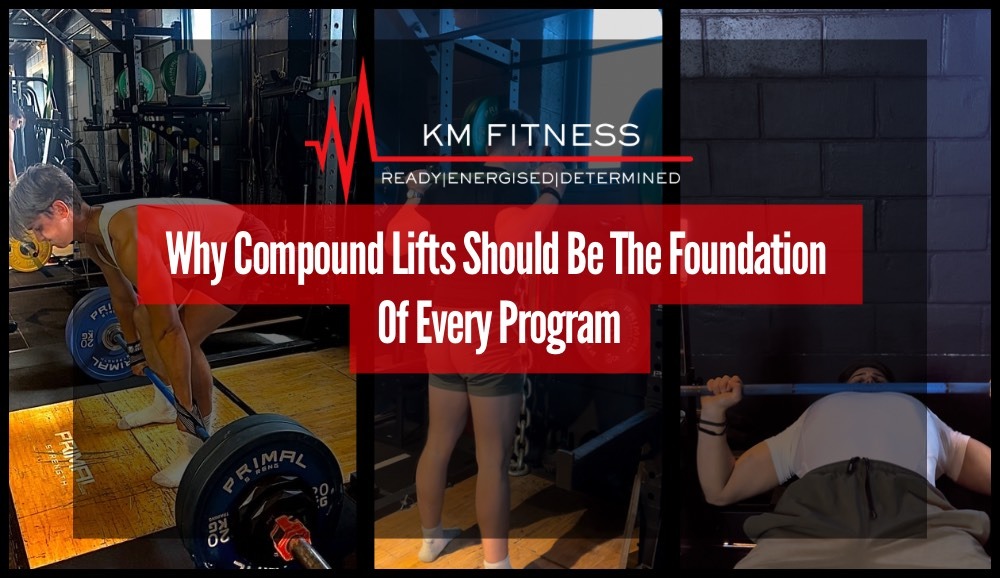
If you’re serious about building muscle, getting stronger, or just becoming more athletic overall, maybe compound lifts need to be front and centre in your training. I’m talking squats, deadlifts, bench press, overhead press, pull-ups, and rows, movements that hit multiple joints and muscle groups at the same time. They’re not just your typical gym classics, they are backed by solid science, and here’s why they work so well.
Muscle Fibre Recruitment
One of the key reasons compound lifts are so effective is how they recruit motor units and muscle fibres. These lifts activate both type I (slow-twitch) and type II (fast-twitch) fibres, especially the type II fibres which are responsible for strength and size. Because you’re moving heavy loads through full ranges of motion and across multiple joints, your body has to fire up a ton of muscle fibres to get the job done. This is where real hypertrophy and strength gains happen.
Big lifts initiate big stress on the body (in a good way). When you train with heavy compound movements, your body responds by releasing anabolic hormones like testosterone, growth hormone, and IGF-1. These hormones play a massive role in muscle repair, growth, and recovery. You’re basically telling your body: “we need to adapt fast,” and the body listens, by building more lean tissue.
Neuromuscular Efficiency
Compound lifts also improve the connection between your brain and your muscles. Every time you squat or deadlift, your nervous system has to coordinate multiple muscles to fire at the right time and in the right order. This increases neuromuscular efficiency you get better at using your muscles. The stronger that connection, the more power you can produce, which carries over to sports performance and even isolation lifts.
Core and Stabiliser Engagement
Unlike machines or isolated movements, compound lifts force your core and stabilising muscles to work overtime. For example, when you perform a barbell overhead press, your entire trunk has to stay engaged to keep you stable. This not only strengthens your core but also helps build injury resilience and better movement patterns. You’re not just getting stronger; you are becoming more functional.
Time-Efficiency and Real-Life Carryover
Another underrated benefit, time efficiency. In one lift, you’re training multiple muscle groups. You could do four isolation movements to hit your legs… or just squat. Compound lifts mimic real-world movements too. Whether you’re lifting something off the floor or pushing something overhead, these patterns show up in day-to-day life and sport.
Conclusion
There’s nothing wrong with isolation work, especially for bringing up weak points or improving aesthetics, but if compound lifts aren’t the foundation of your program, you’re leaving gains on the table. They’re scientifically proven to activate more muscle, boost hormone levels, increase neural drive, and make you stronger, faster. So, if you’re chasing size, strength, or performance, start with the big lifts, and build everything else around them
Ketan McHale – KM FITNESS
Find Oragyms
We’re just down from the Sovereign Crossroads, on Holmfirth Road, Shepley





